I’ve visited Japan over seven times and surfed up and down its coasts. I keep going back for the full experience, not the mind-blowing waves… but it can get very good. If you’re considering a surf trip to Japan, this guide will help you make the right decision.
Decision Point 1: Should I Go on a Surf Trip to Japan?
The Simple Decision Framework:
If you’d love to see Japan and consider it a bonus to get some waves while on your trip, then the answer is an easy YES.
If you are dead set on scoring great waves and your trip stoke is riding entirely on getting barreled or surfing a world class point, then the answer is an easy NO.
The Exception: If you have deep local connections, extreme flexibility, and a high budget then your chances of scoring great waves dramatically improves.
The rest of this section will explain why this is the case in more detail so you can make a decision about planning a surf trip to Japan.
The Reality of Surf in Japan
Wave Quality & Consistency
If you are comparing Japan to predictable swell magnets that receive consistent, long-distance groundswell like Indonesia, Australia, Western Europe, Northwest Africa, or Central America… then a surf trip to Japan is going to look awfully challenging.
While it does turn on, it does so less often than many other places. 95% of the time Japan waves are small with low power.
When the waves do come, they are much more likely to be fun to very fun, rather than epic. Japan absolutely does get epic, but it requires a specific combination of factors that is incredibly difficult for a foreign surfer to align: the exact typhoon track, precise swell angle, favorable local winds, specific tide windows, and where you’re allowed to paddle out. Let’s break these down.
Japan’s Best Swells Are Generated By Typhoons
In my latest visit to Japan I stayed for three months at the peak of typhoon season. Over three months I saw four significant swell events from typhoons, each one only providing a few days of good swell.
My Surf Sessions in Japan
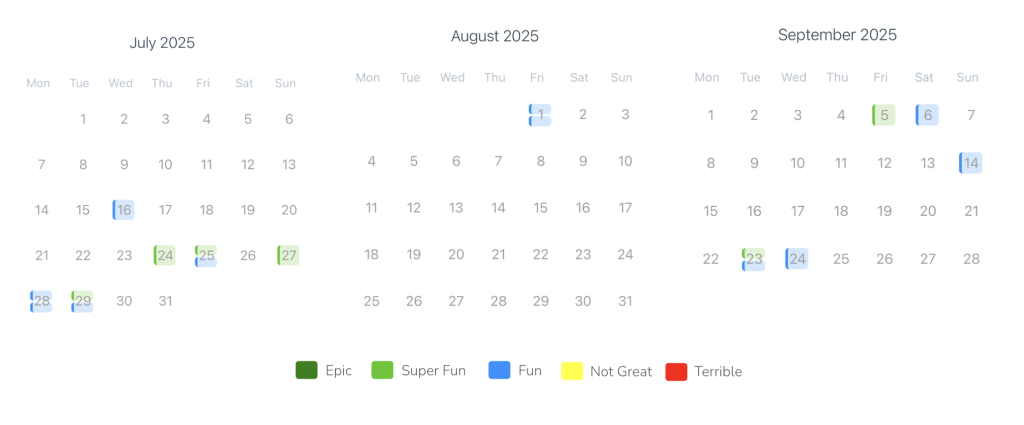
I spent a massive chunk of my time waiting for typhoons to develop and trying to determine what parts of Japan they might be delivering swell to. The strength and course of typhoons changes erratically, making it challenging to plan more than two days in advance.
If you decide to chase typhoon swells in Japan, check Part 3 where I provide a guide to forecasting.
Key Takeaway: Swells in Japan are unpredictable and to be where the swell is arriving from any given typhoon, you have to be ready to cover serious ground.
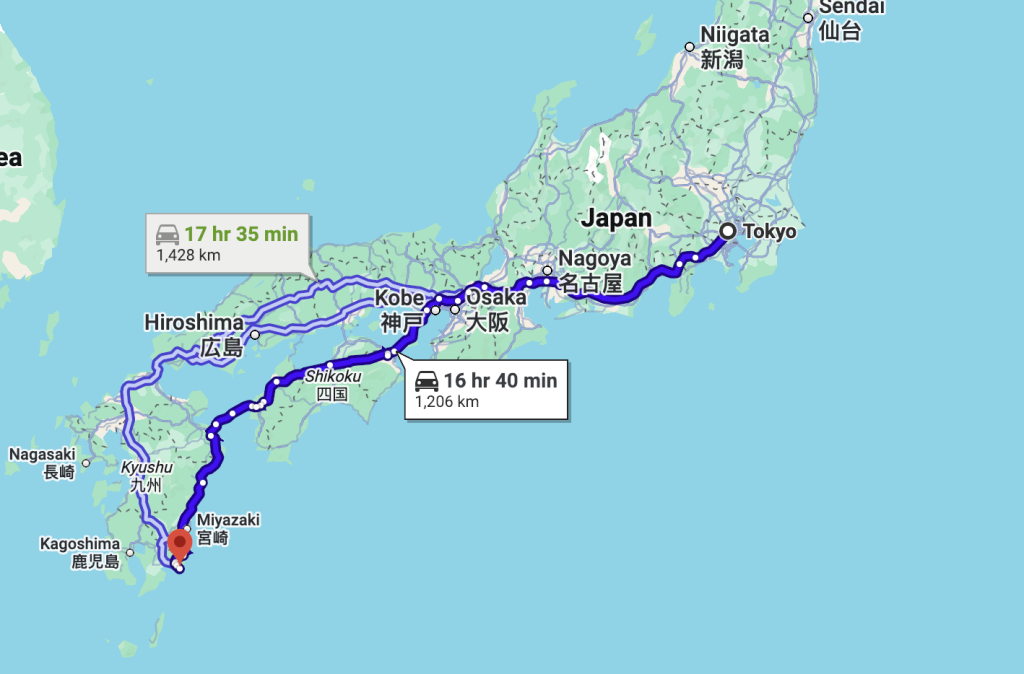
Example: While surfing in Miyazaki, I met a father and son who had taken their camper van all the way from Tokyo for the three-to-four-day typhoon swell window that was available only in the south of Japan. This is the level of dedication required to score here.
Wave Quality
Typhoon swells are finicky. You need to have the right strength and right proximity to the coast to get good waves. From most typhoons, the waves are softer, come in closer together, and are less organized than groundswells that have had thousands of miles to groom out across the open ocean.
While the shape is friendlier and consistency is higher with weaker swells, the power and cleanliness of the waves is lower.
There are exceptions:
- Strength: A few typhoons each year develop to high strength, which creates significant swell.
- Location: There are some river mouths and reefs that can barrel even on moderate swells, but these are the most guarded by locals.
Wave Consistency: Typhoon Swells
To give you an idea of the timing, strength, and location of wave-generating typhoons through a typical season, here’s what 2025 looked like:
2025 Pacific Typhoons
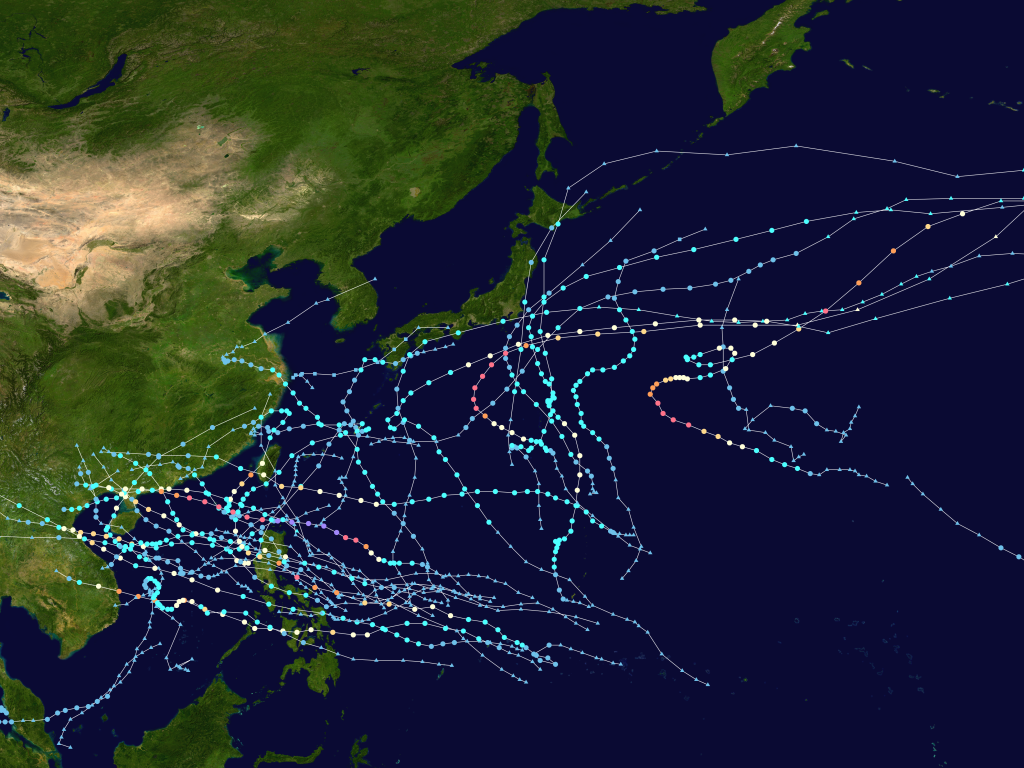
2025 Pacific Typhoons by Strength and Timing
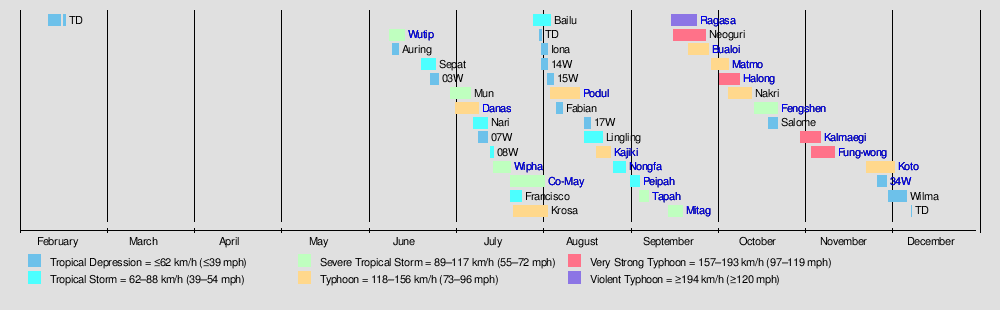
2025 Pacific Typhoons Generating Swell for Japan’s Coastlines
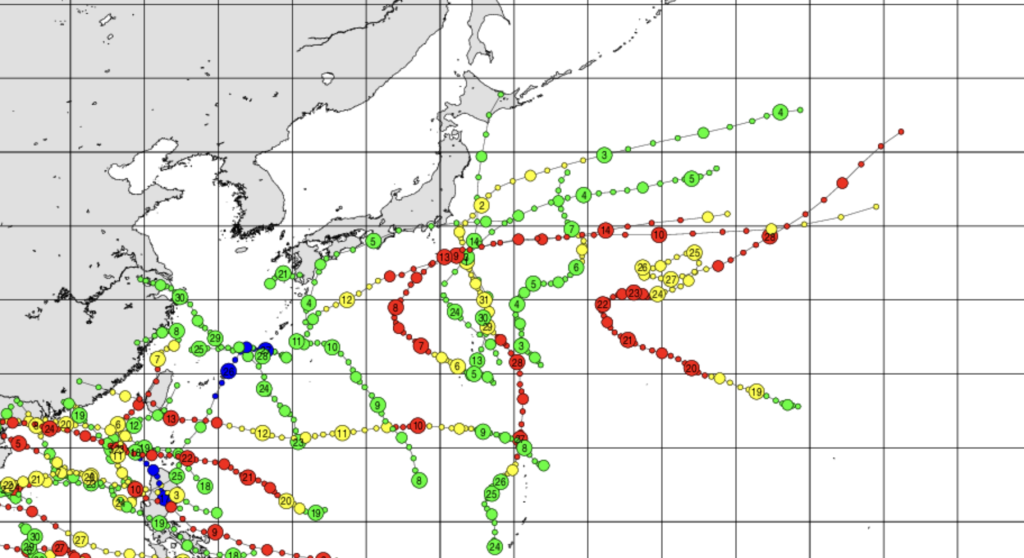
Key Takeaway: It’s rare that timing, strength, and location of a typhoon will line up to send waves your way.
The Crowd Dynamics
Breaks close to major metropolitan areas like Tokyo are notoriously packed. You will see lineups completely swarmed even when the waves are small, soft, and weak. However, if there are multiple swells in the water and conditions are clean across the region, the crowd spreads out. Once you get away from the cities and out into the countryside, you can easily find quality breaks with very few surfers around.
Accessibility & Localism
Physically, the coastlines are highly accessible if you have a vehicle. The challenge comes down to information and local dynamics:
- Main Breaks: The obvious spots—the ones published on Surfline or clearly visible from main roads—are generally welcoming. As long as you are being respectful, the locals are friendly and happy to share the stoke.
- Rural Breaks: There is very little public information available about rural waves. Much of that knowledge is held tightly within local communities. Many of these secretive pockets can be quite territorial, and navigating them takes extra care.
This is why it’s hard to get great surf in Japan. The flipside is that the other aspects of travel in Japan are better than most other places I’ve been to.
Travel Basics: Costs & Logistics
Affordability Tier
Japan sits in a moderate affordability tier. It is going to cost you more than developing surf hubs like Indonesia, Central America, or Morocco, but it is significantly less expensive than taking a trip to Australia or the United States. If you factor in the quality of life (amenities, food, transportation), Japan provides the highest bang for your buck.
Infrastructure
For a surfer used to the challenging logistics, questionable sanitation, stray dogs, and general chaos of developing surf regions, Japan is an absolute treat.
The infrastructure is unrivaled. The cleanliness and comfort of the public facilities—even the completely free public beach showers and bathrooms in rural areas—are better than anywhere else I have ever traveled. You might find similar cleanliness in a place like Switzerland, but when you factor in the price and convenience, nothing touches Japan.
Language Barrier
The trade-off for not having to worry about stray dogs or drinking the tap water is navigating a complex system in a foreign language. While Japan is generally friendlier to English than a country like China, getting accurate information about surf breaks, local forecasts, and coastal access takes extra work and a lot more luck than most standard surf destinations. (more on that in Part 3)
The “Non-Surf” Factor (The 10/10 Experience)
The reason I keep going back to Japan is not for the surf. The depth of experience outside the water is worth the price of the plane ticket on its own.
Food Culture (10/10)
As far as the amount of pleasure you can derive from a meal for your dollar, no country beats Japan. The dining experience is far superior to anything else I’ve experienced globally. Everything from the extreme precision of the preparation to the taste and the quality of service elevates the entire trip.
Cultural Immersion (10/10)
Japan has the most interesting culture of any country I have ever visited. Driving through the countryside, meeting locals, and hiking between surf sessions provides a deeply engaging backdrop. When you view the surf as just one component of a broader adventure, you insulate yourself from flat spells.
Foreigner Presence
Japan is simply not a major destination on the global surf-travel map. In my multiple months of surfing across the country, I saw very few foreigners in the water. The few I did run into were almost exclusively expats living in Japan full-time, not travelers who had flown in on a dedicated strike mission.
Section Takeaway
If you decide to pull the trigger on Japan, go for the food, the culture, and the road trip experience. If you happen to time it right with a typhoon and score some fun beach breaks along the way, consider it a massive bonus to an already incredible trip.
Decision Point 2: Where Should I Go in Japan?
Once you have decided to accept the reality of Japan’s swell patterns, the next step is choosing your Region. Because the country is a sprawling archipelago, different regions offer entirely different trip dynamics, logistics, and wave types.
To help you narrow down the field, here are three distinct trip models showcasing the geographic diversity and trade-offs of Japan’s coastlines.
Itinerary 1: The Classic Intro — Tokyo, Chiba, & Shonan
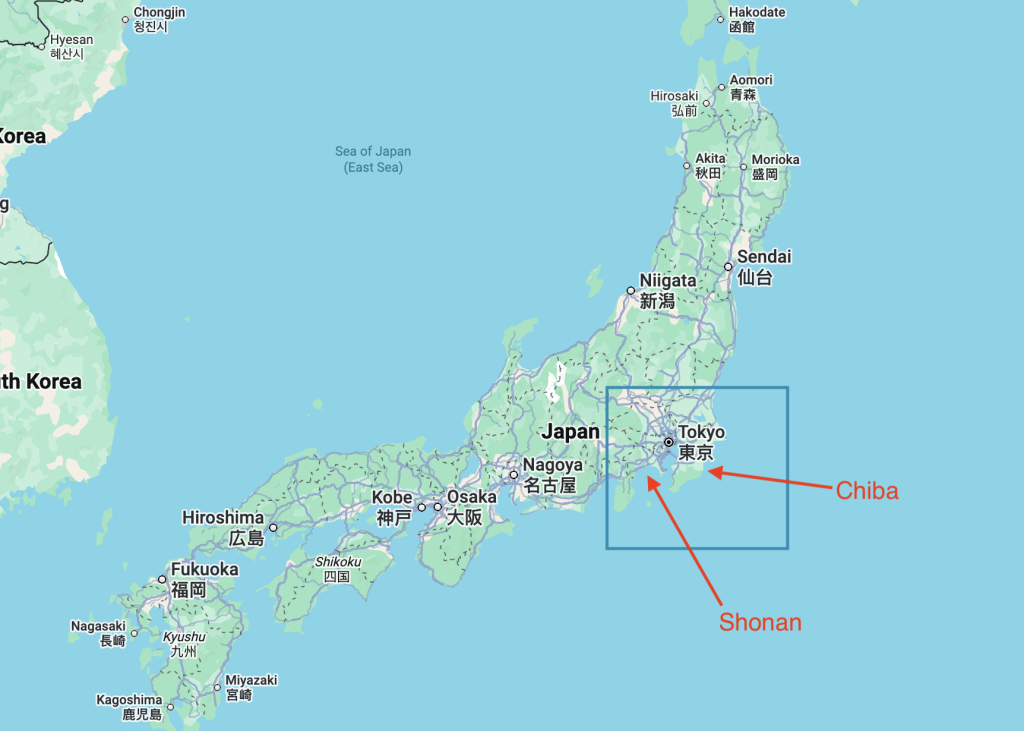
My very first trip to Japan in 2012 followed this track. It was specifically not a surfing trip, but we carved out three days in Chiba because my travel buddy was participating in a contest there. Japan had already completely blown my mind, and being able to meet a few local surfers and catch a few waves was icing on the cake.
If you are going to Japan for more of a cultural visit with the hope of catching a few waves, this is a great call. If you are dead set on prioritizing higher-quality waves, you can either modify this classic route to focus almost exclusively on Chiba, or pivot to the second or third itineraries.
- The Waves: You’ll almost certainly get small waves in crowded conditions. There’s a small chance you’ll be there during a typhoon swell, in which case you’ll get moderate to good waves (still in crowded conditions).
- The Strategy: Fly into Tokyo and hit some of the top sites. Based on the surf report, head to Shonan or Chiba for a few days at a time.
Shonan Sub-Region
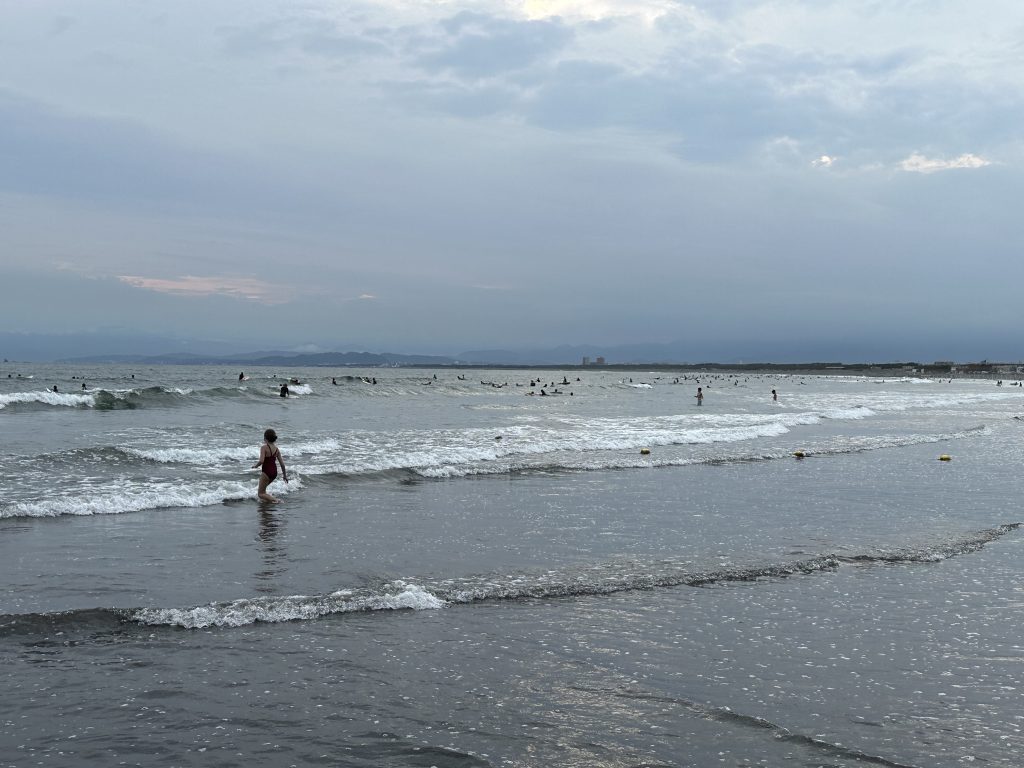
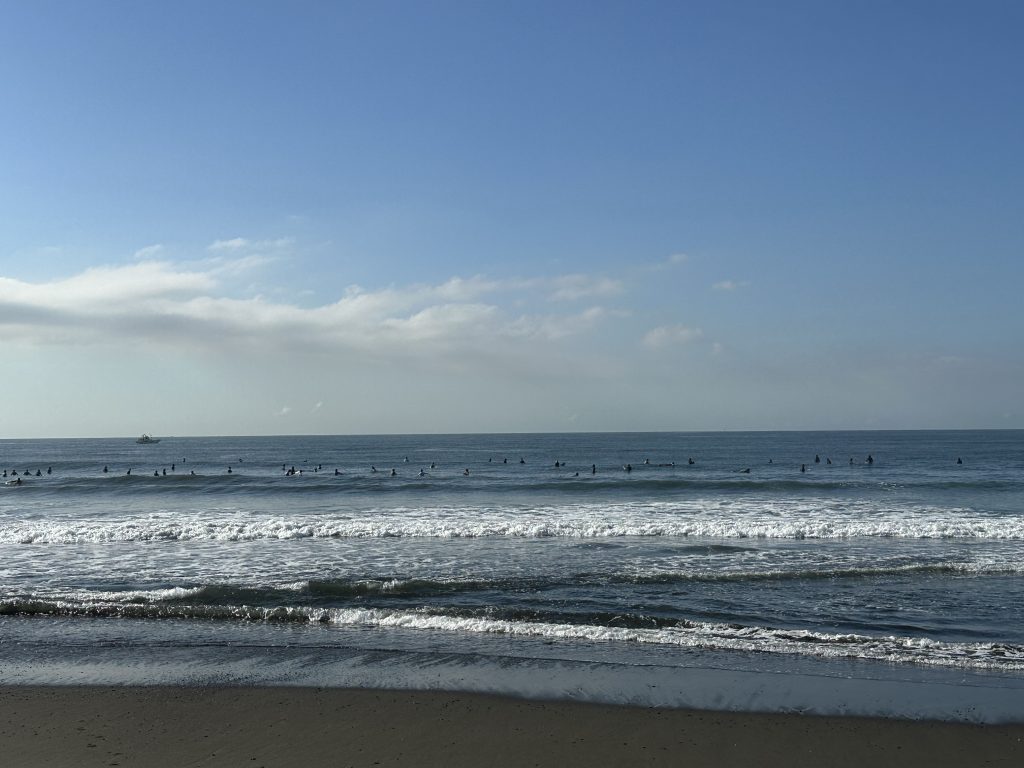
Shonan is the closest surf hub to Tokyo. You can get from central Tokyo to the beach in under an hour by train.
- The Pros: It features a historic surf scene, incredible coastal sightseeing, and a vibrant beach culture right under Mount Fuji.
- The Cons: The waves are almost always as small as the buildings and cars packed into the area. It is highly fickle, requiring a very precise typhoon angle to wrap swell into the bay. When it does work, you have to compete with thousands of highly skilled locals who have the breaks absolutely dialed. Keep your expectations focused on sightseeing and checking out the local scene, with only a small possibility of getting a few waves on a longboard or fish.
Chiba Sub-Region
Chiba is a massive surf hub where they hold significant competitions, including the Tokyo Olympics at Taito Beach. It is a more rural escape compared to Shonan but remains just as popular with surfers.
- The Pros: Highly welcoming surf hostels, friendly locals if you are being respectful, and a consistent setup for alternative shapes. The shape of the beach breaks is generally nice because the waves lack the heavy, raw ocean power that causes sandbars to shut down and close out.
- The Cons: The baseline surf consists of soft, small, short-period wind swells. However, in late summer or early fall, typhoons are much more likely to track into the northern region and there’s a higher chance of getting a more reasonable swell.
Note: You can get surf in Chiba in the winter from local storm systems. Learn more about the shoulder season here:
Itinerary 2: The Southern Strike — Miyazaki (Kyushu)
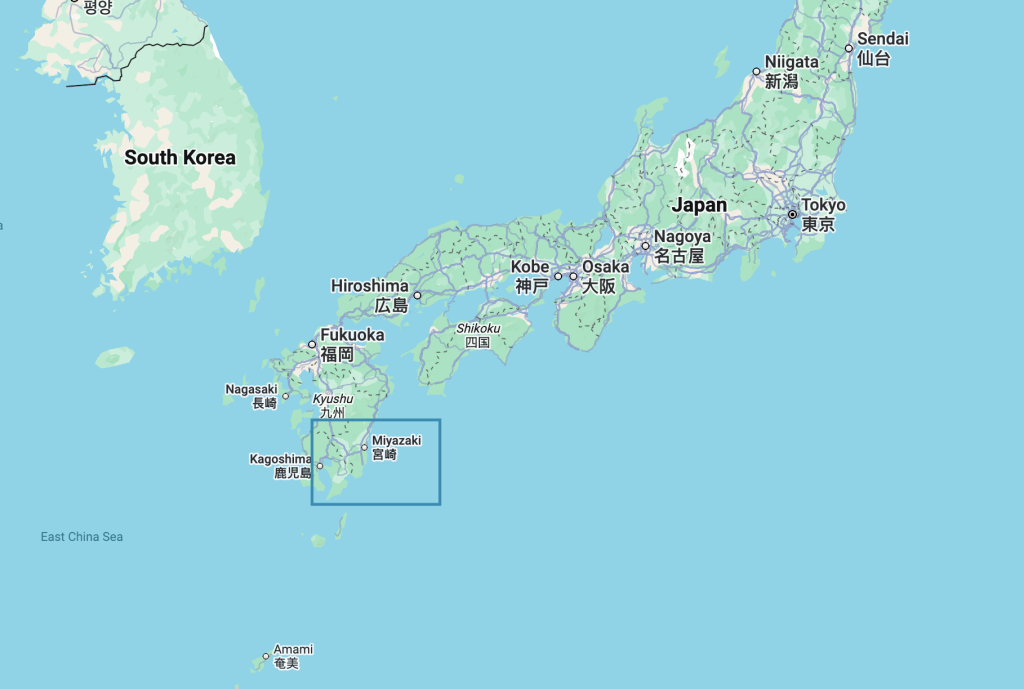
Miyazaki is one of several prefectures in Kyushu, the southernmost of Japan’s four main islands. Because it sits closer to “Typhoon Alley,” it has a much higher probability of catching swell. It is a lower-population, laid-back region with a high-stoke surf community—offering a stark contrast to the big city of Tokyo or the spiritual hub of Kyoto.
- The Waves: Mostly small-medium beach breaks, but also has reefs and river mouths that can turn on with enough energy.
- The Strategy: Rent a camper or surf van to serve as your mobile base. I waited in Miyazaki City for close to two weeks before a typhoon finally developed off the coast. The moment it did, I rented the van and hit the road.
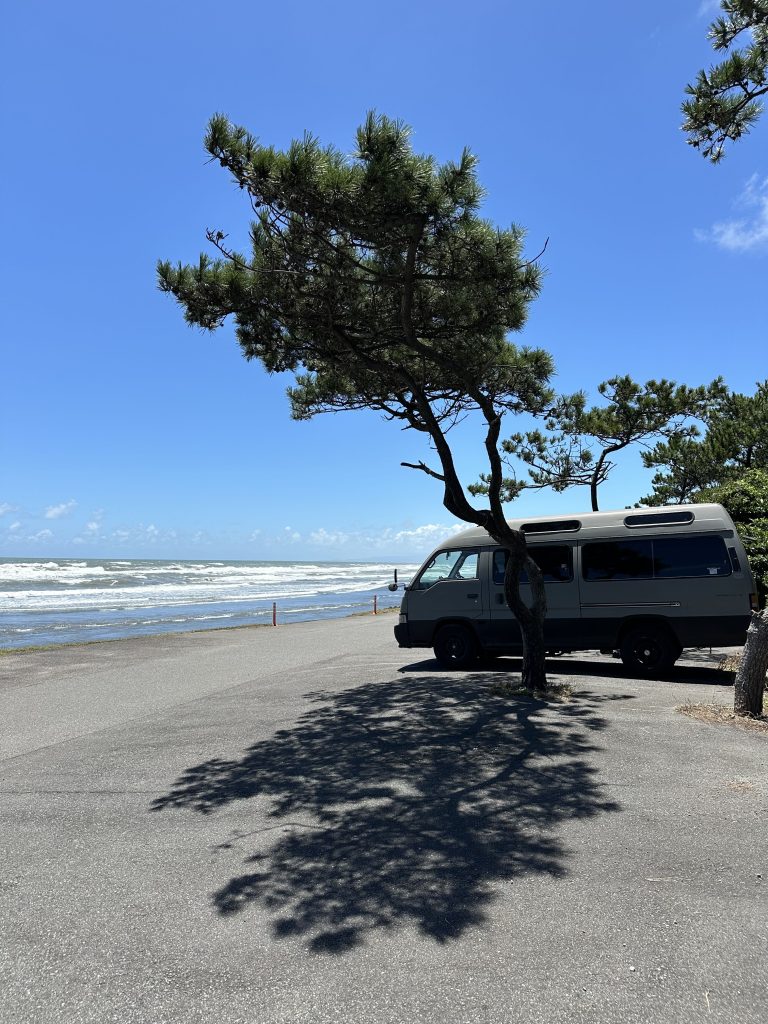
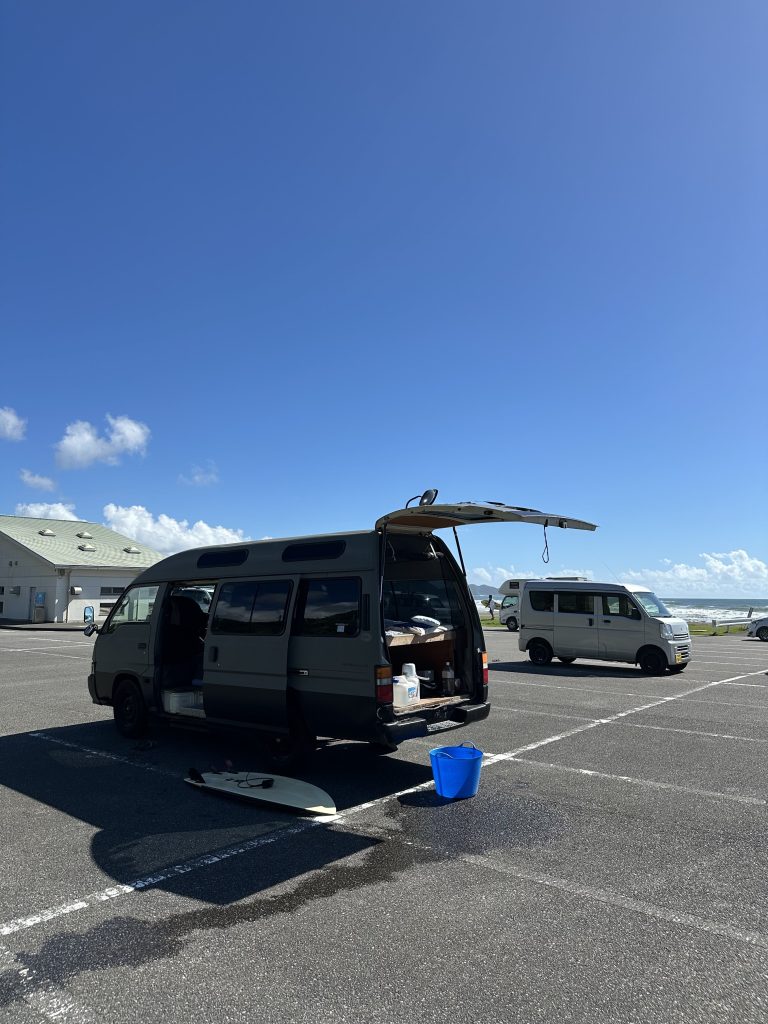
Having a vehicle you can sleep in allows you to cover serious ground, check various breaks, and explore other sites between sessions. Public infrastructure makes this pretty easy—even in rural areas, you have access to clean public changing facilities, showers, and immaculate restrooms.
The summer heat was a challenge for me, since I had a budget van. If you can afford it, I recommend getting a RV with AC.
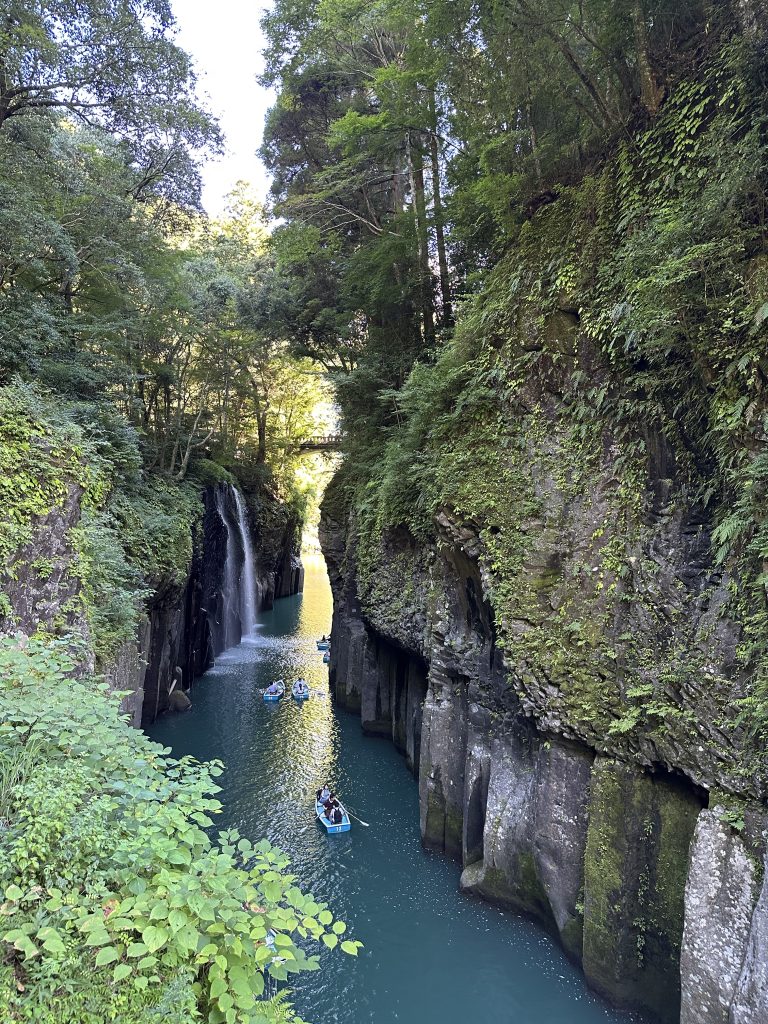
Key Takeaway: The surf prospects are better than the Tokyo area, but not mind-blowing. You’re still rolling the dice on whether a typhoon pops up while you’re there. But when you consider the full experience—driving through the quiet countryside, meeting local people, going hiking between surf sessions, and eating spectacular food for a great price—the trip ranks right up there with expeditions where I’ve scored the best waves of my life.
More Detail on Miyazaki Surf: Surf Guide – Miyazaki by Van
Itinerary 3: The Tropical Frontier — Okinawa
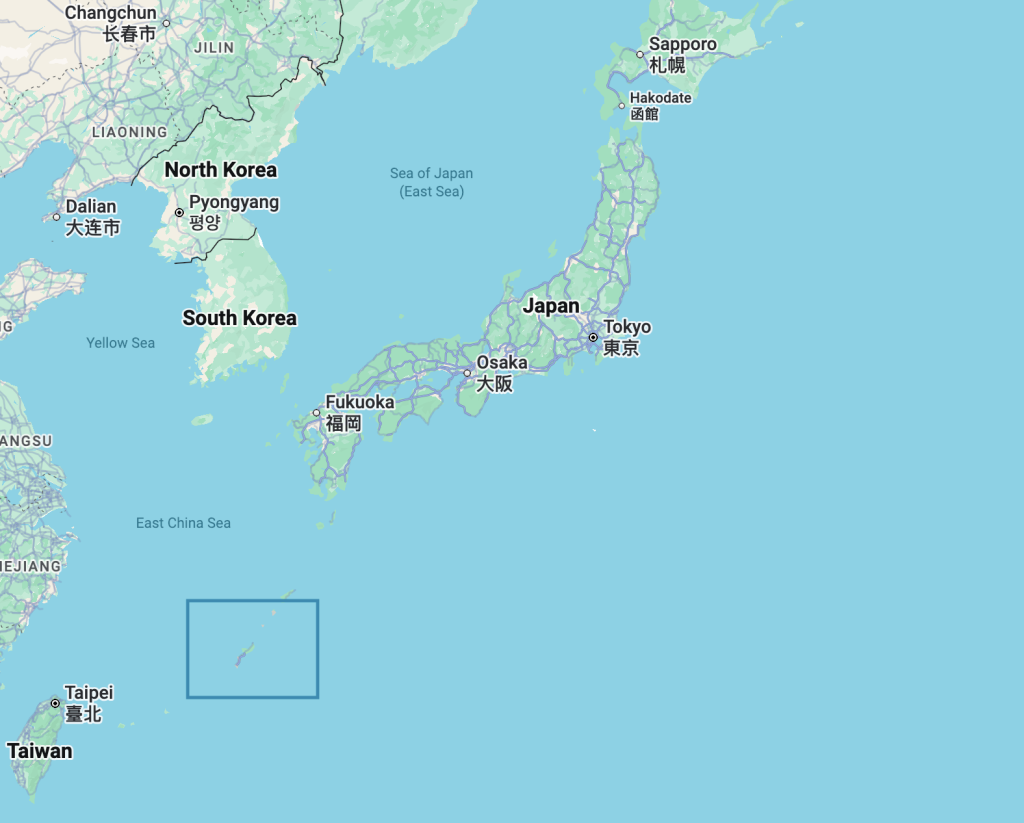
Okinawa is a completely different animal from mainland Japan. Apart from sharing the core language and culture, I’d classify it as a different surf trip altogether. The logistics, the climate, and the wave mechanics are unique to this southern island chain.
- The Waves: More technical, tropical reef-breaks for experienced surfers.
- The Strategy: Head to Okinawa in peak season (mid to late summer) and you’ll likely get waves.
If you have already visited mainland Japan and want that same culture but with a distinct, tropical island twist, this is the call. Your chances of getting consistent surf go up significantly here.
Or if you have the time and budget (2 weeks or more), you can easily spend a week soaking in the food and culture around Tokyo, and then take a three-hour domestic flight down to Okinawa for $150 to $300 USD.
Section Takeaway
- Choose Tokyo/Chiba if you want a culturally dominant trip where a few fun, soft sessions on a fish or longboard are a bonus.
- Choose Miyazaki if you want to have mixed surf and rural culture trip. You can try van life, explore the rural coastlines, and might get lucky with a typhoon swell.
- Choose Okinawa if you’ve been to mainland Japan already and have the experience to handle shallow, tide-dependent coral reef breaks.
You can combine multiple regions, but in your planning take into account the time, cost, and effort of moving between regions. If you only have a week or ten days, then taking a full day to move regions is 10% or more of your total trip. There’s plenty to see in every region and you’re likely better off saving the next region for a follow up trip.
Part 3: Planning & Tips
Ultimate Flexibility is Your Greatest Asset
If you lock yourself into a fixed itinerary, you are at the mercy of whatever swell happens to show up. If a typhoon tracks north and you are stuck in a non-refundable room down south, you will either miss the window entirely or end up paying double to book last-minute emergency lodging elsewhere.
My recommendation: Book your first few nights so you can get oriented, then plan and book according to where the swell is.
Swell Tracking
Adjust your itinerary around incoming swell as offshore typhoons develop. If you’re monitoring correctly you’ll have 2-4 days notice on swell.
Detailed Guide: Japan Swell Tracking & Forecasting Guide
Inter-Island Logistics
If you’re serious about getting waves you must be ready to pick up and cross the country when a swell develops. Japan’s transit infrastructure makes this incredibly efficient if you maintain the budget and the mindset to execute it. You can easily check out of a spot in the morning, load your gear onto the Shinkansen (bullet train), or catch a quick domestic flight, and be paddling out on the opposite end of the country the next day.
The Vehicle Mandate
I did manage to have one very fun session that I accessed entirely without a car, but it required an immense amount of work and a ton of luck. I had to lug my board bag onto a local train from Tokyo out toward Shonan, walk about a kilometer through town to the beach, change on the sand, and leave all of my possessions on the beach. Luckily, no one tampered with my stuff (Japan is extraordinarily safe) and I local met a surfer in the water who gave me a ride home.
Apart from this one instance, I needed a car to get to every other break.
The Vehicle Setup
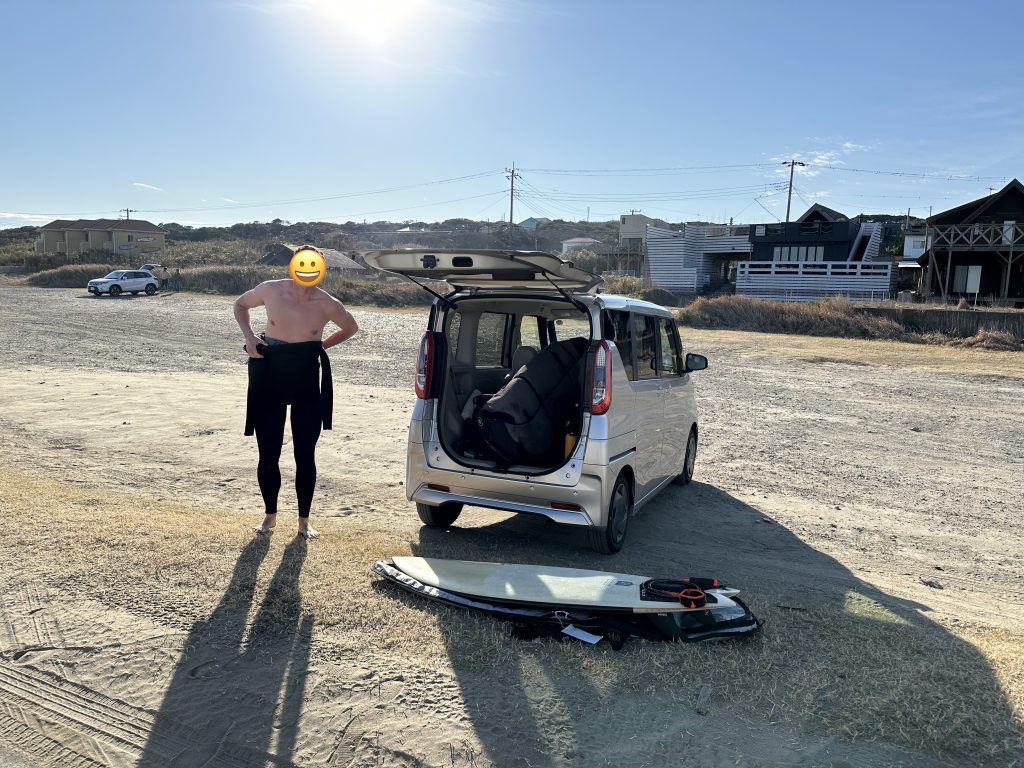
Renting a car or a camper van is easy and straightforward. It’s also critical to be able to pull up right to the break, check the conditions, keep your gear dry, have a changing station, etc. Trying to save money by opting out of a vehicle will drastically reduce your ability to find good waves.
Mandatory for Rentals: You must obtain a valid International Driving Permit (IDP) from your home country before you leave. You cannot rent a car without it.
Tips to Manage Your Budget
Like most places, cost is directly tied to your proximity to major populations and heavily trafficked tourist zones. Even though I expected this trend, the extremity of it surprised me. Miyazaki was half the cost of Tokyo and Kyoto. Take this into consideration when budgeting.
Ground Transportation – If renting a car, limit it to the days there is surf. You can get to the sightseeing places via public transportation for a fraction of the cost.
Accommodations – Hostels or Pods / Capsule hotels are much cleaner and more comfortable in Japan than any other country I’ve traveled to. Every one I went to had a storage area big enough for my board bag. Especially in Tokyo, this is a good alternative to the very high priced hotels.
Food – If you find your budget getting low, you can eat at a steep discount by buying the surprisingly high quality meals from convenience stores like Seven Eleven or Lawson. Or, head to the premade food section of any supermarket after 4pm when they discount premade meals by up to 50%.
Storing and Transporting Boards
Lugging a massive, heavy surfboard bag through crowded train stations, up and down stairs, and through crowded alleys gets old fast. Fortunately, Japanese shipping infrastructure offers a brilliant workaround. You can utilize Yamoto or JAL ABC shipping services to send your board bag to your next hotel for you. Some will also store your luggage for several days. It’s a common and direct service. Ask your hotel attendant for help.